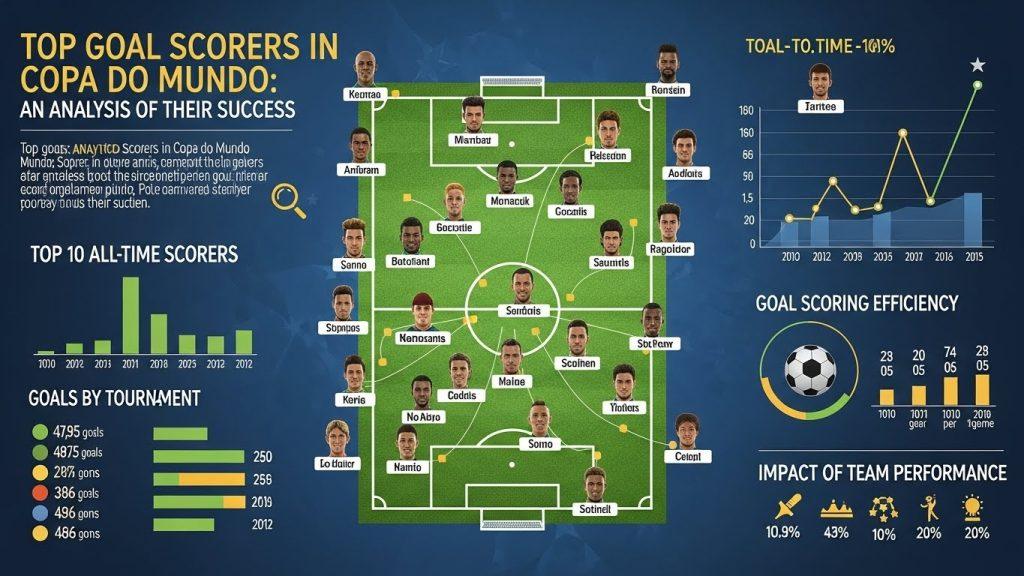
Top Goal Scorers in Copa do Mundo: An Analysis of Their Success
The FIFA World Cup, or Copa do Mundo as it is known in Portuguese, is the most prestigious tournament in international football. Every four years, countries from around the globe compete for the coveted trophy, and while teamwork and strategy are crucial, individual brilliance often shines through in the form of exceptional goal scorers. These players have not only left an indelible mark on the game but have also become legends in their own right. In this article, we will delve into the stories of the top goal scorers in Copa do Mundo history, analyzing what made them successful and their impact on the sport.
The Importance of Goal Scoring in the World Cup
Scoring goals is the essence of football. In a tournament as competitive as the World Cup, a single goal can mean the difference between advancing to the next round or facing an early exit. The pressure to perform is immense, and only a few have consistently risen to the occasion. The top goal scorers in World Cup history have demonstrated an uncanny ability to find the back of the net under the most demanding circumstances.
Beyond the obvious contribution to a team’s success, prolific goal scorers bring excitement and drama to the game. They have the ability to change the course of a match in an instant, captivating fans and creating unforgettable memories. The legacy of these players is measured not just by the number of goals they have scored but by the moments of magic they have gifted to the world.
Legendary Goal Scorers of the World Cup
Among the many players who have graced the World Cup stage, a select few stand out for their exceptional goal-scoring records. These legends have achieved feats that have earned them a permanent place in football history.
Miroslav Klose: The Record Holder
Miroslav Klose, a German striker, holds the record for the most goals scored in World Cup history, with 16 goals. Klose’s World Cup journey spanned four tournaments from 2002 to 2014. Known for his aerial prowess and impeccable timing, Klose was a consistent performer for Germany. His ability to score crucial goals in important matches made him an invaluable asset to his national team. Klose’s dedication and hard work are exemplified by his record-breaking performance, which was the result of meticulous preparation and relentless determination.
Ronaldo Nazário: The Phenomenon
Ronaldo Nazário, also known simply as Ronaldo, is one of the most iconic footballers of all time. The Brazilian forward scored 15 goals in World Cup tournaments, leaving a lasting impact on the sport. Ronaldo’s remarkable blend of speed, skill, and finishing ability made him a nightmare for defenders. His standout performance came in the 2002 World Cup, where he scored eight goals, including two in the final against Germany, securing Brazil’s fifth World Cup title. Ronaldo’s career was a testament to his extraordinary talent and resilience, overcoming injuries to reach the pinnacle of football.
Gerd Müller: Der Bomber
Gerd Müller, a German striker nicknamed “Der Bomber,” is renowned for his incredible goal-scoring record. With 14 goals in World Cup competitions, Müller was a key player in Germany’s 1974 World Cup victory. His ability to find space in crowded penalty areas and his clinical finishing made him one of the most feared strikers of his era. Müller’s instinctive play and knack for scoring in critical moments earned him a reputation as one of the greatest goal scorers in football history.
What Makes a Great World Cup Goal Scorer?
Scoring goals in the World Cup requires more than just technical ability. It demands composure, intelligence, and mental fortitude. The top goal scorers in World Cup history share several common traits that have contributed to their success.
Technical Skill
Technical skill is a fundamental attribute for any successful goal scorer. The ability to control the ball, dribble past defenders, and execute precise shots are essential skills that top scorers possess. Players like Ronaldo and Klose have displayed exceptional technical prowess, allowing them to capitalize on scoring opportunities even in high-pressure situations.
Positional Awareness

Great goal scorers have an innate sense of positioning. They can read the game and anticipate the movement of the ball, placing themselves in optimal positions to receive passes and convert them into goals. Gerd Müller’s ability to find space in congested penalty areas is a prime example of positional awareness at its finest.
Mental Toughness
The World Cup is a stage where pressure is amplified, and the margin for error is minimal. Top goal scorers possess mental toughness that allows them to remain focused and composed, even in the most intense moments. This mental resilience, combined with their unwavering self-belief, enables them to perform at the highest level.
The Impact of Goal Scorers on Their Teams
The influence of prolific goal scorers extends beyond individual accolades. Their contributions often have a profound impact on their teams’ performances and fortunes in the World Cup.
Inspiration and Leadership
Top goal scorers often serve as leaders and sources of inspiration for their teammates. Their ability to deliver in crucial moments can uplift the entire team and instill a sense of confidence and belief. Players like Ronaldo Nazário and Miroslav Klose have been instrumental in motivating their teams with their performances, setting the standard for excellence.
Strategic Influence
Teams often build their strategies around their star goal scorers, utilizing their strengths to maximize scoring opportunities. The presence of a prolific scorer can dictate the flow of a match, forcing opponents to adjust their defensive strategies. This strategic influence can create openings for other players, diversifying a team’s attacking options.
The Legacy of World Cup Goal Scorers
The legacy of World Cup goal scorers is etched in the annals of football history. Their achievements transcend individual records, becoming part of the collective memory of fans and the sport itself.
Inspiring Future Generations
Legendary goal scorers inspire future generations of players to dream big and strive for greatness. Their stories serve as a reminder of what is possible with talent, hard work, and dedication. Aspiring footballers look up to these icons, drawing motivation from their journeys.
Celebrating the Beautiful Game
The exploits of top goal scorers celebrate the beauty of football. Their ability to create moments of magic on the field captivates audiences and showcases the essence of the sport. The World Cup is a stage where the world’s best talents converge, and the performances of these goal scorers elevate the tournament to an unparalleled level of excitement.
Takeaways
The top goal scorers in the history of the Copa do Mundo have left an indelible mark on the sport of football. Their success is a testament to their skill, determination, and impact on the game. From Miroslav Klose’s record-breaking achievements to Ronaldo Nazário’s electrifying performances, these players have defined eras and inspired generations. Their stories are a celebration of the beautiful game and a reminder of the power of individual brilliance in the world’s most popular sport. As we look forward to future World Cups, the legacy of these great goal scorers will continue to inspire and captivate fans around the globe.
For more insights into football legends, explore UEFA’s official website for comprehensive coverage of European football history.
The Evolution of Goal Scoring in the World Cup
As football has evolved, so too have the strategies and techniques employed by goal scorers. The evolution of the game has seen changes in player roles, tactics, and even the technology used to analyze and enhance performance. Understanding these developments provides insight into how modern-day strikers adapt and thrive in the World Cup arena.
Tactical Shifts
Over the decades, tactical approaches in football have undergone significant transformations. In the early days, formations were heavily oriented towards attack, often featuring multiple strikers. As defensive strategies became more sophisticated, the role of the striker evolved to adapt to these challenges. Players had to become more versatile, often dropping deeper to link up play and create chances. This tactical evolution is evident in the performances of modern strikers who possess the ability to contribute to both attack and defense.
Technological Advancements
Technological advancements have also played a crucial role in the evolution of goal scoring. The introduction of video analysis and performance tracking has enabled players to refine their skills and understand their opponents better. Coaches and analysts use data to devise strategies that exploit weaknesses in the opposition’s defense. This scientific approach to the game has allowed goal scorers to fine-tune their techniques and maximize their effectiveness on the field.
Changing Player Profiles
The profile of modern goal scorers has also changed. Today’s strikers are often faster, stronger, and more athletic than their predecessors. The emphasis on physical fitness and conditioning has led to the emergence of players who can maintain high levels of performance throughout a match. Additionally, the globalization of football has seen diverse styles and techniques being integrated, leading to a more dynamic and unpredictable style of play.
Analyzing the Success of Recent World Cup Goal Scorers
In recent World Cups, several players have emerged as standout goal scorers, showcasing their talents on the global stage. Analyzing their success provides valuable insights into the qualities required to excel in the modern era of the tournament.
James Rodríguez: The Rising Star
James Rodríguez burst onto the scene during the 2014 World Cup, winning the Golden Boot with six goals. The Colombian midfielder’s performances were characterized by his creativity, vision, and ability to score stunning goals from a distance. Rodríguez’s success was attributed to his technical ability and confidence, which allowed him to shine in a tournament filled with star players.
Harry Kane: The Prolific Englishman
Harry Kane, England’s talismanic striker, claimed the Golden Boot at the 2018 World Cup with six goals. Kane’s success was built on his clinical finishing, intelligent movement, and leadership qualities. His ability to remain composed under pressure and convert chances was instrumental in England’s journey to the semi-finals. Kane exemplifies the modern striker’s adaptability, capable of playing as a traditional number nine or dropping deep to influence play.
Looking Ahead: The Future of World Cup Goal Scoring
As we look to future World Cups, the landscape of goal scoring is expected to continue evolving. Emerging talents are poised to make their mark, and advancements in training and technology will further shape the way strikers approach the game. Here are some trends and expectations for the future:
Integration of Analytics
The use of analytics in football is set to become even more prevalent. Teams will increasingly rely on data-driven insights to optimize player performance and devise innovative attacking strategies. This integration of technology will enable goal scorers to refine their techniques and exploit defensive vulnerabilities with greater precision.
Youth Development and Global Influence
With football’s growing global reach, youth development programs are nurturing a new generation of talent from diverse backgrounds. Young players are exposed to various playing styles, allowing them to develop unique skill sets. The blend of different cultural influences will lead to a more dynamic and creative approach to goal scoring in future World Cups.
Emphasis on Versatility
The modern game demands versatility from players, and future goal scorers will need to adapt to multiple roles on the field. Strikers who can seamlessly transition between different positions and contribute to both offensive and defensive phases will be highly sought after. This adaptability will be a key asset in overcoming the tactical challenges posed by opponents.
Takeaways
The top goal scorers in Copa do Mundo history have demonstrated exceptional skill, determination, and adaptability. Their successes have elevated the World Cup to new heights, captivating fans and inspiring future generations of footballers. As the game continues to evolve, the art of goal scoring will undoubtedly adapt, influenced by technological advancements and changing player profiles. The legacy of these legendary goal scorers serves as a testament to the enduring appeal of the World Cup and the timeless magic of football.
For a comprehensive overview of World Cup history, visit History Channel’s World Cup section for detailed articles and insights.
About the Author