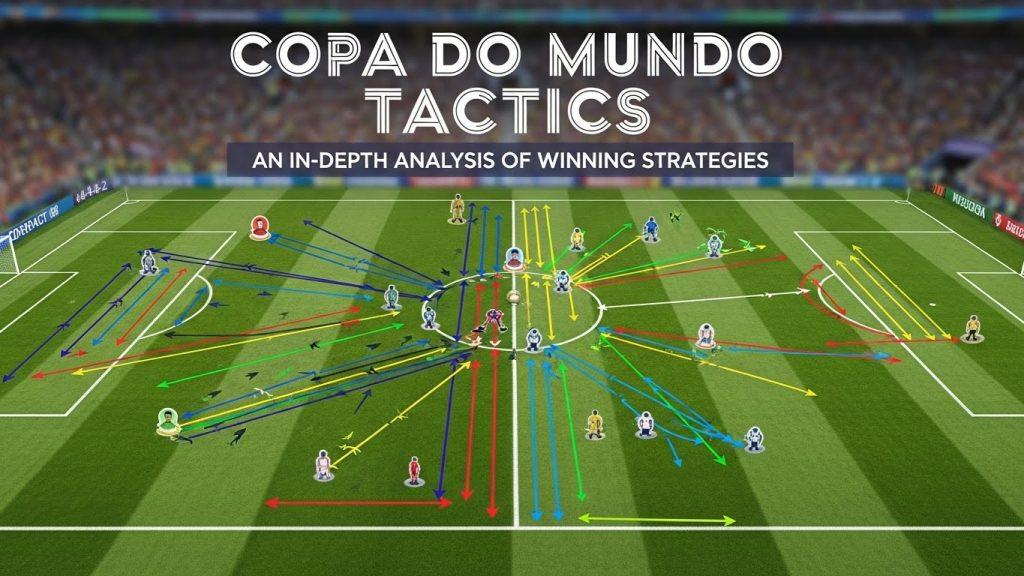
Copa do Mundo Tactics: An In-depth Analysis of Winning Strategies
The FIFA World Cup, known as the Copa do Mundo in Portuguese, is the pinnacle of international football. It is a tournament where nations showcase their best talent, and coaches employ intricate strategies to outmaneuver their opponents. In this comprehensive analysis, we delve into the tactics that have shaped past and present World Cup successes. From defensive formations to attacking prowess, we explore what makes a winning strategy on the global stage.
The Evolution of World Cup Tactics
Over the years, football tactics have evolved dramatically. Early World Cups were dominated by a straightforward approach, with teams focusing on physicality and basic formations. However, as the sport grew, so did the complexity of the strategies employed. The shift from a 2-3-5 formation to the more modern 4-3-3 or 4-2-3-1 reflects this evolution.
One of the most significant tactical revolutions was the introduction of “Total Football” by the Dutch in the 1970s. This approach emphasized versatility, with players interchanging positions seamlessly. It was a tactic that not only dazzled spectators but also laid the groundwork for future innovations.
Defensive Strategies: The Backbone of Success
Defense wins championships, or so the saying goes. A solid defensive strategy is often the backbone of a successful World Cup campaign. Teams like Italy and Germany have historically excelled in this area, utilizing formations such as the Catenaccio and the sweeper system to great effect.
The use of a deep-lying playmaker has been another key element in defensive tactics. This player acts as a conduit between defense and attack, orchestrating play from a deeper position. Teams like Spain, with Xabi Alonso in 2010, have effectively employed this strategy, enabling them to control the pace of the game and transition smoothly from defense to attack.
Midfield Mastery: The Engine Room
The midfield is often referred to as the engine room of a football team. It’s where battles are won and lost, and the ability to dominate this area of the pitch is crucial. The midfield trio of Xavi, Andres Iniesta, and Sergio Busquets was instrumental in Spain’s 2010 World Cup triumph, showcasing the importance of technical skill and tactical awareness.
Modern World Cup teams often opt for a three-man midfield, allowing them to control possession and dictate the tempo of the game. The ability to maintain possession not only tires the opposition but also creates opportunities for incisive passes and attacking movements.
Attacking Prowess: Creativity and Execution
While defense is crucial, goals win games. Teams with a potent attacking lineup have always been feared in the World Cup. Brazil’s 1970 squad is often cited as one of the greatest attacking teams in history, with players like Pele and Jairzinho leading the charge.
Modern attacking tactics have seen the rise of the “false nine” position, where a forward drops deeper into midfield to create space and confusion in the opposition’s defense. This strategy was famously utilized by Spain and Barcelona with Lionel Messi, transforming the way teams approach attacking play.
The importance of wingers cannot be overstated either. Speedy, skillful wingers stretch the play and provide crucial width, allowing teams to exploit weaknesses in the opposition’s defense. The likes of Arjen Robben and Franck Ribery have epitomized this role in recent World Cups, providing both goals and assists.

Set Pieces: The Underrated Weapon
Set pieces, including corners and free-kicks, play a pivotal role in the World Cup. Matches are often tight, and the ability to capitalize on these opportunities can be the difference between victory and defeat. Teams like England have become specialists in set-piece scenarios, with a significant portion of their goals in recent tournaments coming from such situations.
The use of innovative set-piece routines has increased, with teams employing clever movements and decoys to unbalance the opposition. The focus on set-piece strategy highlights the importance of preparation and execution in modern football.
The Role of Technology and Analytics
In the digital age, technology and analytics have become integral to World Cup tactics. Coaches and analysts use data to gain insights into opposition strategies, player performance, and potential tactical adjustments. Tools such as video analysis and tracking systems provide a wealth of information that can be leveraged to gain a competitive edge.
The introduction of the Video Assistant Referee (VAR) has also impacted World Cup tactics. Teams must now consider the potential for reviews and adjust their strategies accordingly. The implementation of VAR has added a new dimension to the game, influencing decisions on the pitch and requiring players to maintain discipline.
Case Studies: Iconic World Cup Strategies
To truly understand the impact of tactics on World Cup success, it’s beneficial to examine specific case studies. Italy’s 2006 victory is a prime example of a defensively solid team triumphing through organization and resilience. Marcello Lippi’s use of a compact defense and counter-attacking play proved successful against some of the world’s best teams.
Similarly, France’s 2018 triumph showcased the effectiveness of a balanced approach. Didier Deschamps created a team that combined defensive solidity with explosive attacking talent. The use of N’Golo Kante as a midfield destroyer allowed creative players like Antoine Griezmann and Kylian Mbappe the freedom to shine.
Conclusion: The Future of World Cup Tactics
As we look to the future, it’s clear that World Cup tactics will continue to evolve. The integration of technology, coupled with the ever-changing dynamics of the game, will lead to new innovations and strategies. Coaches will need to adapt quickly, using data-driven insights to inform their decisions and gain a competitive advantage.
Ultimately, the key to World Cup success lies in a team’s ability to blend defensive resilience, midfield mastery, and attacking flair. By studying past triumphs and staying ahead of tactical trends, future World Cup participants can increase their chances of lifting the coveted trophy.
The Copa do Mundo remains the ultimate stage for tactical innovation and excellence. As teams prepare for the next tournament, the strategies they employ will be scrutinized, analyzed, and admired by fans and experts alike. The pursuit of World Cup glory is as much about mental acumen and strategic planning as it is about raw talent and skill.
Tactical Flexibility: Adapting to Opponents
One of the most crucial aspects of a successful World Cup campaign is tactical flexibility. The best teams are those that can adapt their strategies to exploit the weaknesses of different opponents. This requires not only a deep understanding of one’s own team strengths but also a detailed analysis of the opposition.
For instance, Germany’s 2014 World Cup victory was characterized by their ability to switch formations and tactics seamlessly. Joachim Löw’s squad could transition from a high pressing 4-2-3-1 to a more conservative 4-1-4-1, depending on the demands of the match. This adaptability was key in navigating the tournament’s various challenges, culminating in their memorable triumph against Argentina in the final.
The Psychological Aspect of Tactical Planning
Beyond the physical and technical elements, the psychological dimension plays a significant role in tactical planning. Coaches often use mind games and motivational techniques to prepare their teams mentally for the pressures of World Cup matches. The ability to remain composed under pressure and execute tactical instructions is often what separates the champions from the contenders.
For example, Brazil’s legendary coach Luiz Felipe Scolari was renowned for his motivational skills, which were instrumental in Brazil’s 2002 World Cup success. His ability to instill confidence and belief in his players was as important as the tactical acumen he displayed.
Emerging Trends in World Cup Tactics
As the game continues to evolve, several emerging trends are shaping the landscape of World Cup tactics. One such trend is the emphasis on high pressing. Teams like Liverpool under Jurgen Klopp have popularized this approach, which has influenced national teams to adopt similar strategies. High pressing involves players applying pressure to the opposition high up the pitch, disrupting their build-up play and forcing errors.
Another trend is the increased use of data analytics to inform tactical decisions. The integration of complex statistical models allows teams to evaluate player performance, identify patterns in opposition play, and devise counter-strategies. As a result, coaches can make more informed decisions, both before and during matches.
The Impact of Youth Development on Tactics
Youth development has a profound impact on national team tactics. Nations with strong youth systems, such as Germany and Spain, often have a wealth of talented players to draw from, enabling them to implement sophisticated tactical systems. The success of Spain’s Tiki-Taka style, which relies on technical proficiency, was built upon a solid foundation of youth development programs at clubs like Barcelona and Real Madrid.
Additionally, the transition from youth to senior level is smoother when players are already familiar with the tactical philosophy. This continuity allows national teams to maintain a consistent playing style across different age groups, providing a competitive edge at the World Cup level.
Conclusion: The Dynamic Nature of World Cup Tactics
In conclusion, the intricacies of World Cup tactics are a testament to the strategic depth of international football. From the evolution of formations and strategies to the psychological and technological advancements, every aspect contributes to the overall success of a team. As the sport continues to grow and evolve, so too will the tactics employed on the world stage.
Coaches and players must remain at the forefront of tactical innovation, learning from past successes and failures while embracing new trends and technologies. The Copa do Mundo will always be a platform for showcasing the beautiful game, where tactical ingenuity and execution are celebrated. As we anticipate future tournaments, one thing is certain: the quest for World Cup glory will continue to inspire generations of players, coaches, and fans around the world.
About the Author